
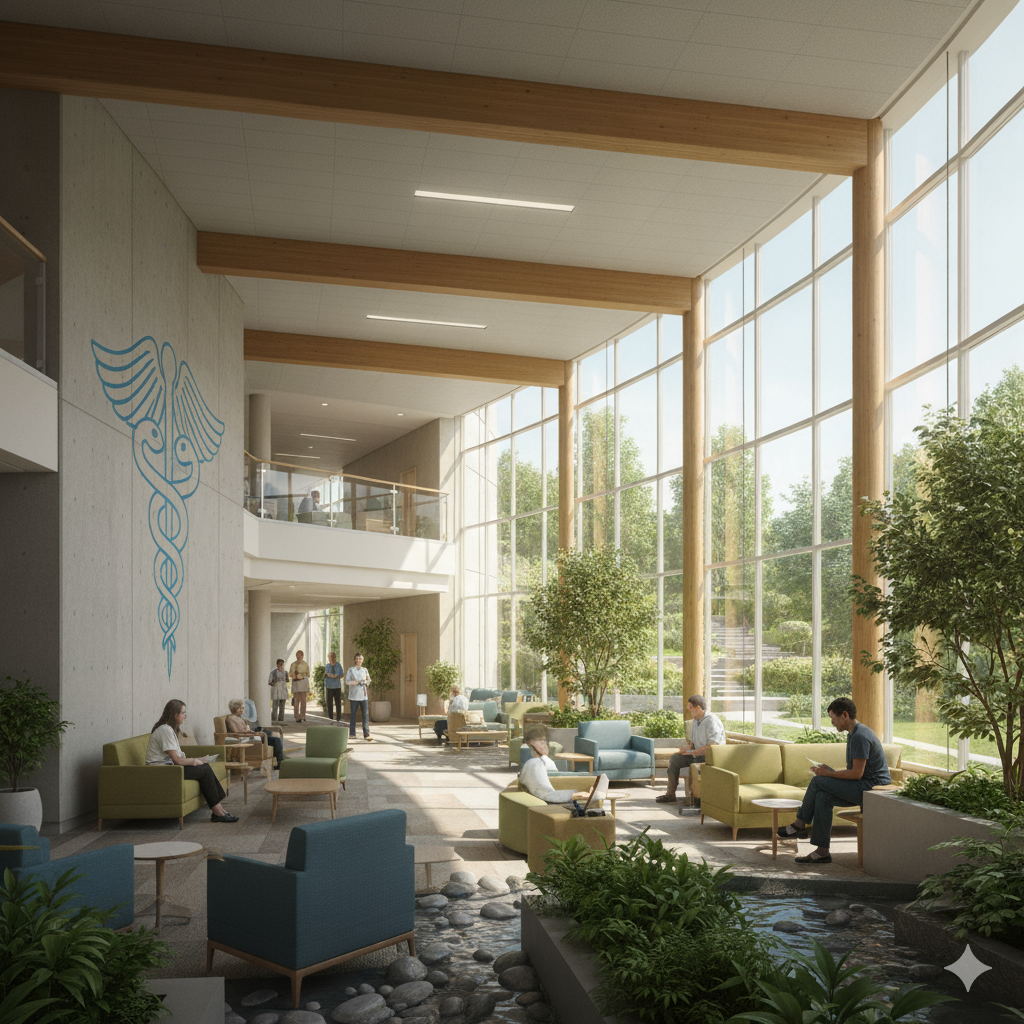
In the world of healthcare, healing is often viewed through the lens of medical intervention, medications, procedures, and technologies. But as someone who has spent over a decade designing and executing turnkey healthcare spaces, I firmly believe that healing begins long before a doctor enters the room. It begins with design.
At RY Hospital Projects LLP, our mission goes beyond construction, we create environments that heal. We’ve seen time and again how the right architecture can shorten hospital stays, reduce patient stress, and improve clinical outcomes.
1. Spaces Speak Before Doctors Do
When a patient enters a hospital, their first impression is not the competence of the clinician, it’s the space. The lighting, the colors, the acoustics, the layout, all silently communicate either comfort or anxiety.
A poorly designed hospital feels chaotic. A well-designed hospital feels safe, calm, and focused on care. This is not just an aesthetic issue; it’s a psychological and physiological one.
2. Evidence-Based Design Isn’t Just Theory. It’s Practice
Studies have shown that patients recover faster when they have access to natural light, views of nature, and private, quiet rooms. These design choices:
- Lower blood pressure
- Reduce dependency on pain medication
- Improve mental health and sleep
In our projects, we integrate biophilic design, optimize air flow, and prioritize noise control, not as trends, but as clinical tools.
3. Architecture that Honors Human Dignity
Healing environments are not just about patients lying in beds. They must also support families, caregivers, and clinicians. Design should offer:
- Privacy without isolation
- Wayfinding without confusion
- Access to nature without complexity
We design with empathy, understanding that every square foot has a role in making someone feel seen, safe, and supported.
4. Design for Clinicians = Better Patient Outcomes
A stressed nurse cannot deliver quality care. A disoriented family member can’t support the healing process. Our design ethos ensures that healthcare professionals have:
- Shorter movement paths
- Smart zoning between sterile and non-sterile areas
- Recharge zones to combat fatigue
Efficiency and empathy must co-exist in every blueprint.
5. Healing is a System. Architecture is Its Skeleton
Hospitals are not machines, they are living systems. Architecture provides the skeletal framework upon which all care rests. It’s where science meets sensibility.
At RY Hospital Projects LLP, we don’t just build hospitals. We build hope. Hope that healing can be holistic. Hope that spaces can be medicine. Hope that design can change lives.
In Closing
The future of healthcare will not only be shaped by innovation in medicine,but by innovation in design. As leaders in hospital infrastructure, we carry the responsibility of ensuring that every design decision is a healing decision.
Because in the end, architecture isn’t just about walls. It’s about wellness.