
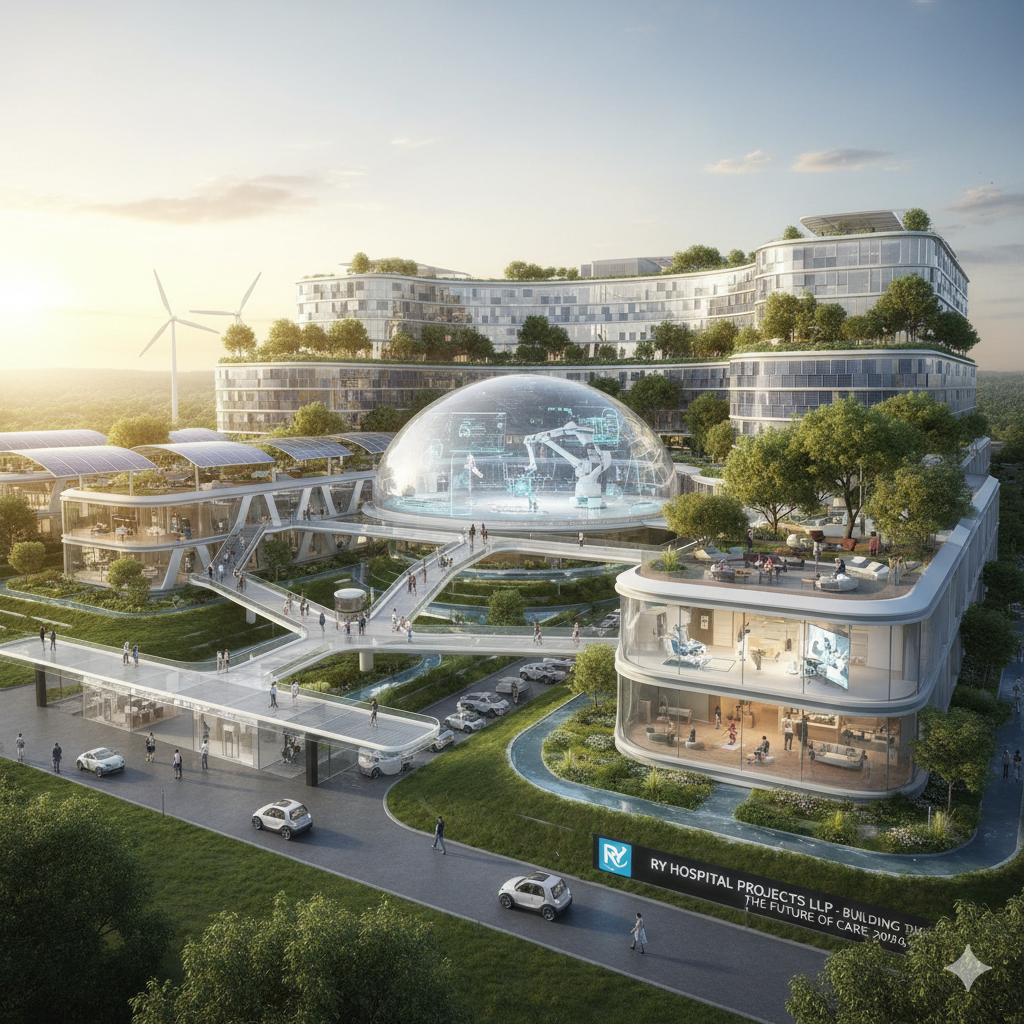
As a builder of hospitals, I’ve always believed that healthcare infrastructure is not just about construction,it’s about preparing society for its most vulnerable moments. And today, that preparation demands we look 15 to 20 years ahead. By 2040, hospitals won’t just be facilities for treatment. They will be integrated ecosystems,designed not only to heal but to predict, prevent, and personalise care.
The question is: Are we building for that future now?
1. From Curative to Preventive: The Shift in Healthcare Philosophy
Traditionally, hospitals have been reactive,people arrive sick, and we try to make them better. But the hospitals of 2040 will be proactive. With the rise of wearable health tech, AI diagnostics, and real-time health monitoring, many conditions will be managed before they become emergencies.
That means our buildings must adapt. Outpatient departments will evolve into wellness hubs. Spaces will be designed not just for treating illness but promoting health,with facilities for screening, counselling, rehabilitation, and lifestyle management.
2. The Infrastructure of Intelligence
By 2040, the backbone of every hospital will be data. Infrastructure must be designed to host and protect enormous digital ecosystems,from patient records and imaging to AI-based decision support systems.
This calls for:
- Secure, integrated server rooms and cloud access points
- IoT-ready environments for smart beds, wearables, and real-time monitoring
- Designated zones for robotics, remote surgeries, and augmented diagnostics
- Touchless navigation and patient movement to reduce infection risk and enhance efficiency
Today, we treat IT planning as an afterthought. In 2040, it will be the foundation.
3. Human-Centered Design Will Define Outcomes
Despite all the talk about technology, the core of healthcare remains human. That’s why future hospitals must place human experience at the heart of design.
Key shifts include:
- Single-patient rooms to reduce infection and improve comfort
- Biophilic design: natural light, ventilation, and indoor greens
- Family-inclusive design: spaces for caregivers, waiting zones that soothe, not stress
- Noise control, privacy, and cultural sensitivity in interiors
A patient who feels cared for heals faster. Design can,and will,drive clinical outcomes.
4. Climate-Resilient, Self-Sustaining Hospitals
The hospitals of the future must also be climate-resilient. Heat waves, floods, and air quality issues are already affecting healthcare delivery. We must build hospitals that:
- Operate on renewable energy (solar, hybrid grids)
- Are self-sufficient in water through recycling and harvesting
- Use low-carbon, recyclable materials
- Feature passive cooling, smart ventilation, and adaptive façades
In short, hospitals must survive climate shocks and stay operational when society needs them most.
5. Flexibility is the New Foundation
If COVID-19 taught us anything, it’s this: rigid infrastructure fails in a crisis.
Hospitals in 2040 will need modular, reconfigurable designs,ICUs that can expand, wards that convert to isolation zones, and admin areas that become emergency command centers overnight.
We must plan for fluidity, not fixed function.
Conclusion: The Time to Build the Future Is Now
The hospitals of 2040 aren’t science fiction. The technologies exist. The design philosophies are clear. The need is urgent. What’s missing is the will to act today.
At RY Hospital Projects LLP, we’ve always believed that good design is a form of care. And if we care about the next generation of patients, we must begin building with 2040 in mind,not 2024.
Because when the future knocks, it shouldn’t have to wait in the ER.