
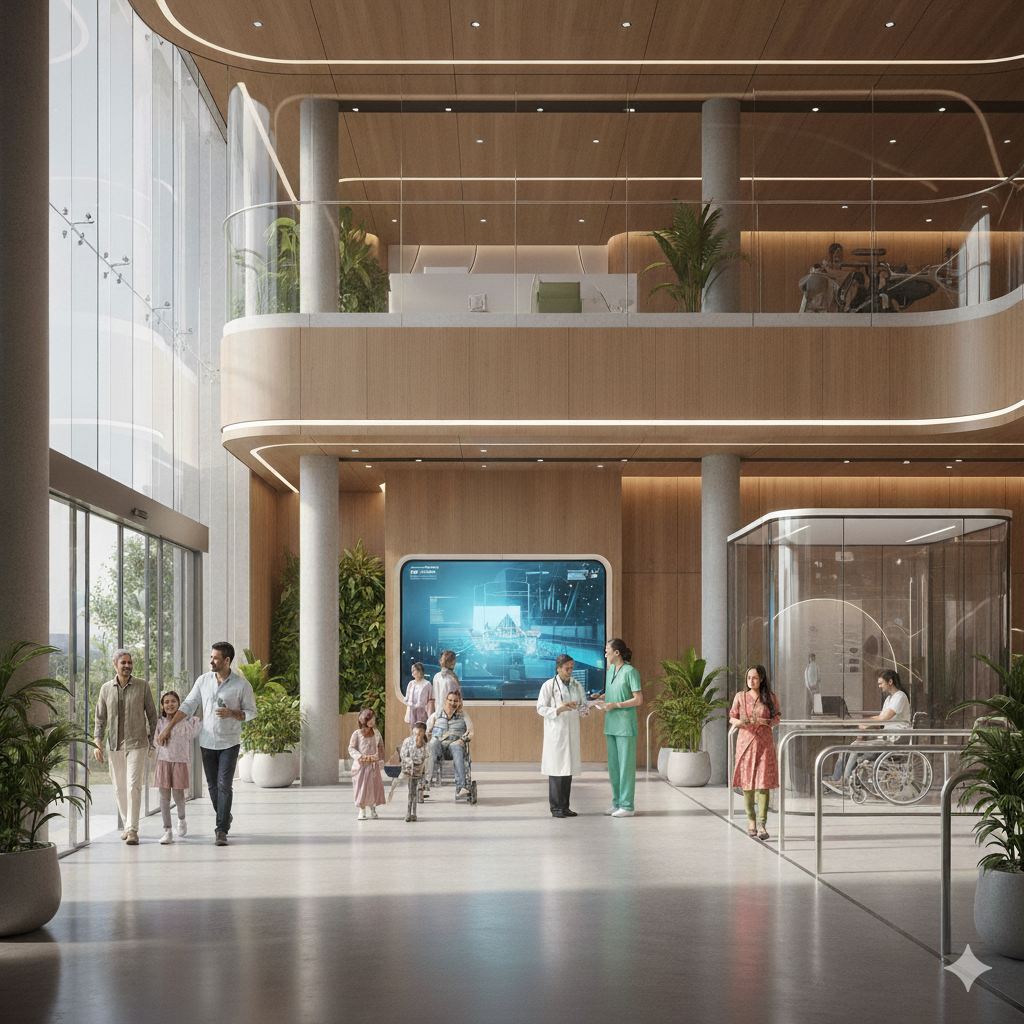
India’s hospitals are facing a paradox. We are building more hospitals, but patients are coming back too soon. Readmissions strain resources, exhaust families, and signal a deeper systemic issue. While we often blame it on discharge planning or follow-up care, we rarely question the role of something even more foundational, hospital design itself.
At RY Hospital Projects LLP, we believe the time has come for a new paradigm in healthcare infrastructure: Preventive Architecture. Architecture that doesn’t just treat disease, but helps prevent its return.
Why Patient Readmissions Are a Design Issue Too
Most readmission-related factors, poor recovery, infection, mental stress, fall injuries, delayed wound healing, are environment-sensitive.
But here’s the problem:
We’re still designing hospitals to process patients, not to sustain their recovery.
The right design elements can lower stress, enhance compliance, minimize hospital-acquired infections (HAIs), and support post-discharge transition. This is the beginning of preventive design thinking.
What is Preventive Architecture?
It’s not just about aesthetics. It’s a strategic approach that aligns design choices with clinical outcomes.
It asks:
- Does this space support patient autonomy and dignity?
- Can this layout prevent errors or reduce infection?
- Will this environment help patients heal fully, not just quickly?
Preventive architecture is proactive. It is the built form of empathy.
Design Features That Act as “Preventive Medicine”
1. Healing-Oriented Room Design
- Single occupancy rooms reduce cross-infection.
- Noise reduction features improve sleep and mental health.
- Ample daylight supports circadian rhythms and recovery.
2. Smart Zoning & Flow Management
- Clear separation between contaminated and clean zones prevents HAIs.
- Properly designed nurse stations allow for real-time monitoring and quicker interventions.
3. Safe Mobility for Post-Surgery Patients
- Grab bars, anti-slip flooring, wider corridors, and seating areas reduce the risk of falls, a major cause of readmission among the elderly.
4. Family-Inclusive Spaces
- Rooms with space for caregivers help with compliance and post-discharge care education, key factors in recovery continuation.
5. Tech-Integrated Infrastructure
- Real-time vitals monitoring, fall alerts, and digital post-care instruction screens enable early detection and better discharge readiness.
Design That Continues Beyond Discharge
Hospitals should not only treat, but prepare patients for the real world. Preventive architecture incorporates:
- Transition zones to simulate home conditions
- Telemedicine pods or support areas for virtual follow-ups
- Behavioral nudges through layout and signage for better hygiene and habits
At RY, we design environments where healing continues beyond the hospital walls.
Cost of Readmission vs. Investment in Design
Reducing readmissions isn’t just a quality goal. It’s an economic one.
The cost of frequent readmissions far outweighs the initial investment in better infrastructure:
- Fewer readmissions = better patient trust, higher hospital ratings, and more sustainable care models.
RY’s Preventive Design Philosophy
At RY Hospital Projects LLP, we now approach every hospital project with a dual goal: treat illness and prevent its return.
We bring together:
- Healthcare planners
- Clinical consultants
- Infection control experts
- Patient behavior researchers
To build hospitals that are not only advanced, but anticipatory.
Final Word
The future of healthcare lies not just in better medicine, but in better design thinking.
Preventive architecture transforms hospitals from reactive spaces to resilient, responsive environments. It reduces readmissions by creating spaces that heal completely, not just temporarily.
It’s time we ask more of our walls, our layouts, and our lighting. Because architecture that prevents readmission is not just smarter, it’s compassion in concrete.