
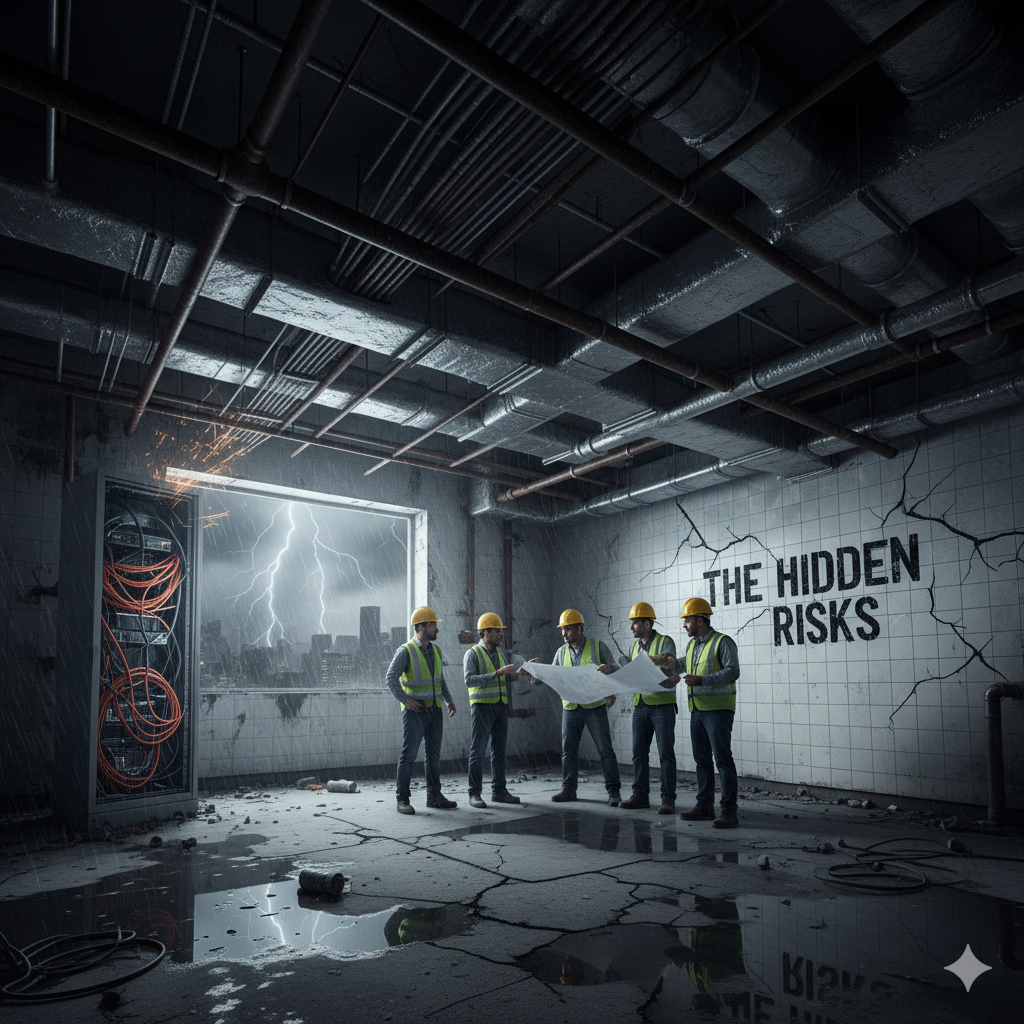
When people think about hospitals, they picture healing. But before healing can happen, something more foundational must be right: infrastructure. And while we often talk about costs, timelines, and technologies, there are critical risks hiding beneath the surface,risks that can compromise safety, delay operations, and even cost lives. After years of working on turnkey hospital projects across India, I’ve realized that the most dangerous risks are the ones that no one sees,until it’s too late.
Let’s talk about them.
1. Design-Execution Disconnect
Too often, the architectural vision and the on-ground execution are worlds apart. What looks great on paper becomes unfeasible due to site realities, regulation changes, or contractor misinterpretation.
The risk?
- Non-compliance with NABH or fire safety norms
- Misalignment of critical service areas like ICU, OT, or emergency exits
- Increased rework, cost overruns, and delayed licensing
The solution?
Integrated teams, continuous feedback loops between designers and project managers, and early involvement of compliance experts during design,not after.
2. Underestimating MEP Complexity
MEP (Mechanical, Electrical, and Plumbing) systems are the heartbeat of a hospital, especially in ICUs, labs, and operation theatres. But many projects treat MEP as an afterthought.
The risk?
- Equipment overload, short circuits, or power failures
- Faulty HVAC systems leading to infection risks
- Delayed commissioning due to poorly coordinated utility layouts
The solution?
Early-stage MEP design integration, real-time BIM modeling, and experienced technical consultants onboard from day one.
3. Site Constraints and Local Challenges
Many project delays stem not from materials or manpower,but from the land itself.
The risk?
- Land slope, waterlogging, soil quality, or zoning restrictions causing structural issues
- Resistance from local communities, contractors, or regulatory bodies
- Overlooking local weather patterns that impact materials and construction windows
The solution?
Detailed pre-construction site due diligence, stakeholder engagement, and adaptive design strategies based on regional climate and ground realities.
4. Hidden Costs in “Value Engineering”
Value engineering is important,but cutting corners in healthcare infrastructure can be dangerous.
The risk?
- Low-grade flooring that causes slips in critical care areas
- Inadequate wall treatments leading to bacterial buildup
- Inferior fire-retardant materials that don’t meet safety standards
The solution?
Prioritize lifecycle costs over short-term savings. Engage with vendors and consultants who understand the nuance of healthcare-specific materials and risk.
5. Regulatory Assumptions That Backfire
Assuming “we’ll get the clearance later” is a dangerous game in healthcare infra.
The risk?
- Delay in building approvals halting construction
- Licensing delays holding up hospital launch
- Penalties or structural rework due to retrospective compliance issues
The solution?
Incorporate regulatory checklists at each project phase. Bring in hospital compliance specialists, not just civil consultants.
6. Operational Blind Spots
A beautifully designed hospital may still fail if it doesn’t consider the workflow of medical staff or the real-world pressure of emergencies.
The risk?
- Long patient transfer times from ER to ICU
- Poor storage design leading to medical supply mismanagement
- Staff fatigue due to inefficient circulation and planning
The solution?
Co-design with hospital administrators, nurses, and doctors. They live the building,you’re just building it.
7. Maintenance Neglect in Design
Hospitals are 24/7 systems,but many designs don’t account for long-term facility management.
The risk?
- No access shafts for maintenance of ducts or cables
- Equipment rooms too small for future upgrades
- Maintenance teams disrupting hospital operations
The solution?
Design with a 10-year lens. Ask: Can this be maintained without disruption? If not, rework it.
Final Thoughts
The greatest risks in healthcare infrastructure aren’t the ones we plan for,they’re the ones we overlook. As builders of healing spaces, we must go beyond budgets and blueprints. We must be proactive risk managers, not just project managers.
At RY Hospital Projects LLP, we’ve built our reputation not just on delivering projects,but on foreseeing what others miss. Because in healthcare, what’s hidden can harm. And what’s well-planned can save lives.